In a world marked by crises—social, ecological, economic, identity-related—the word hope can seem fragile, even out of step. Some see it as a naive stance, a form of disguised resignation, or simply a superficial optimism.
And yet, all over the world, women and men continue to get involved, to educate, to pass on knowledge, to protect, to connect. Not because they ignore reality, but precisely because they face it head-on.
Hope, when experienced as a conscious decision, becomes a true lever for social transformation. It does not deny the difficulties: it simply refuses to let them have the last word.
Hope ≠ naivety: deconstructing a misunderstanding
One of the major misunderstandings surrounding hope is confusing it with passive optimism. Hoping does not mean waiting for things to change on their own.
On the contrary, genuine hope is clear-sighted. It starts from reality, sometimes harsh, often complex.
To hope is to recognize:
- that inequalities exist,
- that educational systems are sometimes flawed,
- that poverty, exclusion or environmental degradation are not abstractions.
But it also affirms that human beings can never be reduced to their current situation.
It is believing that a young person who has dropped out of school can get back on their feet, that a community can rebuild itself, that a damaged territory can be regenerated.
Hope as a driving force for social engagement
Throughout the history of major social transformations, hope has always been a silent but powerful driving force. It is what motivates action even when results are not immediate, even when figures are slow to materialize.
In the non-profit sector, hope often takes the form of:
- loyalty in commitment,
- educational perseverance,
- the ability to provide long-term support
- the rejection of dependency in favor of autonomy.
She fosters a vision of impact that is not limited to what is measurable, but is interested in what is sustainable.
 Education and youth: where hope takes root
Education is undoubtedly one of the areas where hope is most tangible. Educating a child or young person is not just about transmitting knowledge or skills.
It allows him to change his perspective on himself.
In many precarious situations, young people grow up with limited horizons, sometimes trapped in narratives of failure or fatalism. Education then becomes a profoundly liberating act.
When learning restores confidence
Educational initiatives carried out in different countries show that:
- Academic support is not only used to improve results,
- Educational spaces are also places of inner reconstruction.
- Human support is just as important as educational content.
Through educational projects led by Fondacio, particularly within the framework of the HOPE (for children) and IMPULSO (for young people) programs, the challenge is clear:
👉 help every young person to believe that they have a place, a value and a future.
 Training is not just about inserting
In training and professional integration pathways, indicators are often quantified: employment rate, certifications obtained, skills acquired.
This data is important. But it doesn't tell the whole story.
Training a young person also means:
- to restore his confidence,
- to help him envision his future,
- to allow him to speak again,
- to support him in building his life project.
Training centers of Fondacio, such as the Young Lives Development Centers (YLDC) or IFF Africa, show that sustainable integration requires comprehensive support: personal, relational, human.
Hope and integral ecology: repairing the links
Today, it is impossible to talk about social transformation without addressing the ecological question. But here again, we are thinking more of a holistic approach: that of integral ecology.
Integral ecology is not limited to the protection of nature. It seeks to repair three fundamental relationships:
- the relationship with oneself,
- relationships with others
- the relationship to creation.
In this vision, environmental projects are never separated from social issues. Protecting the environment also means fighting poverty, strengthening local communities, and promoting fairer ways of life.
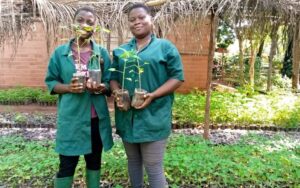 Projects that combine social and ecological hope
In several countries, our projects or those we support involve:
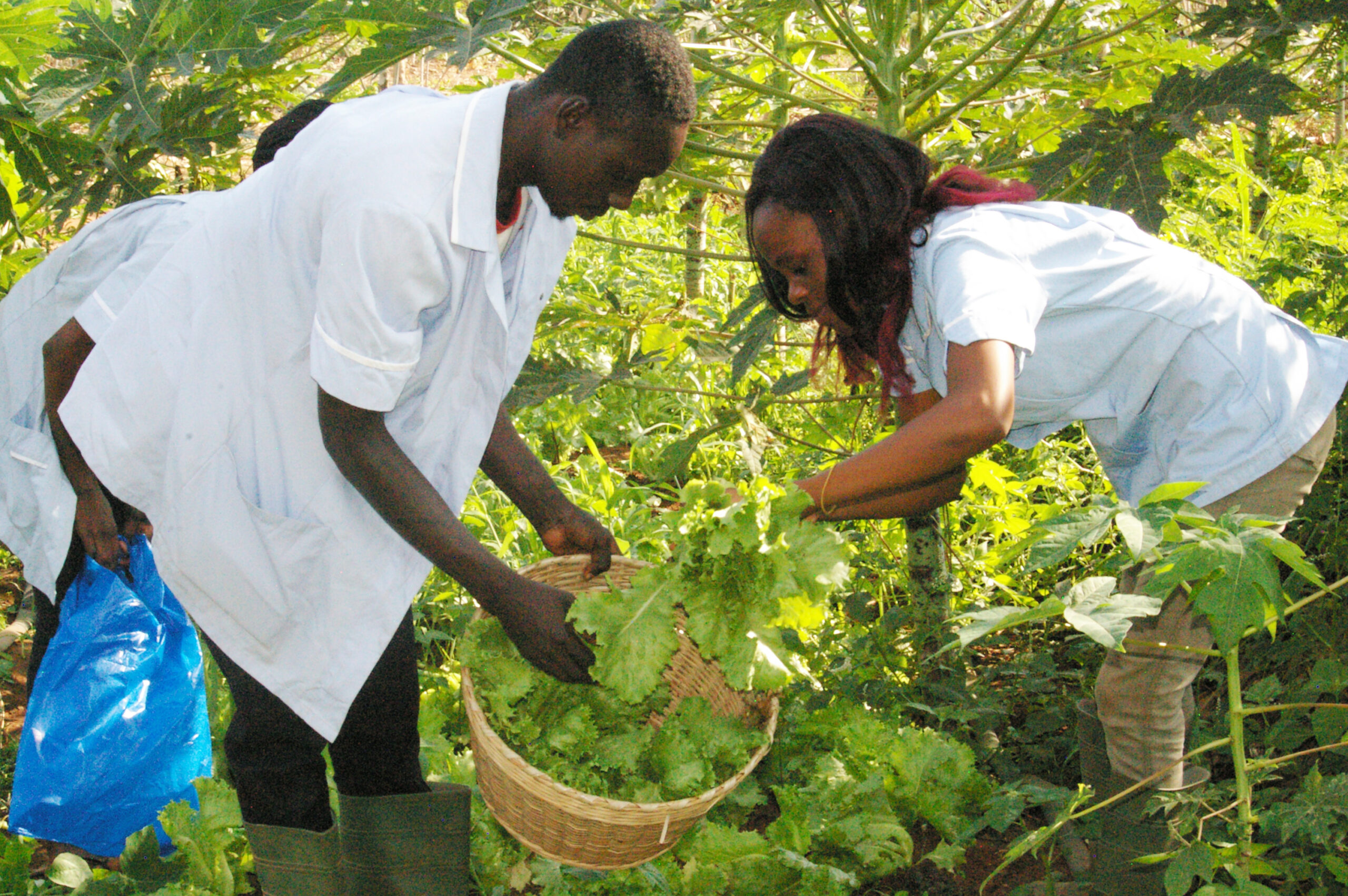
- agricultural training,
- local entrepreneurship,
- environmental awareness,
- empowerment of young people and families.
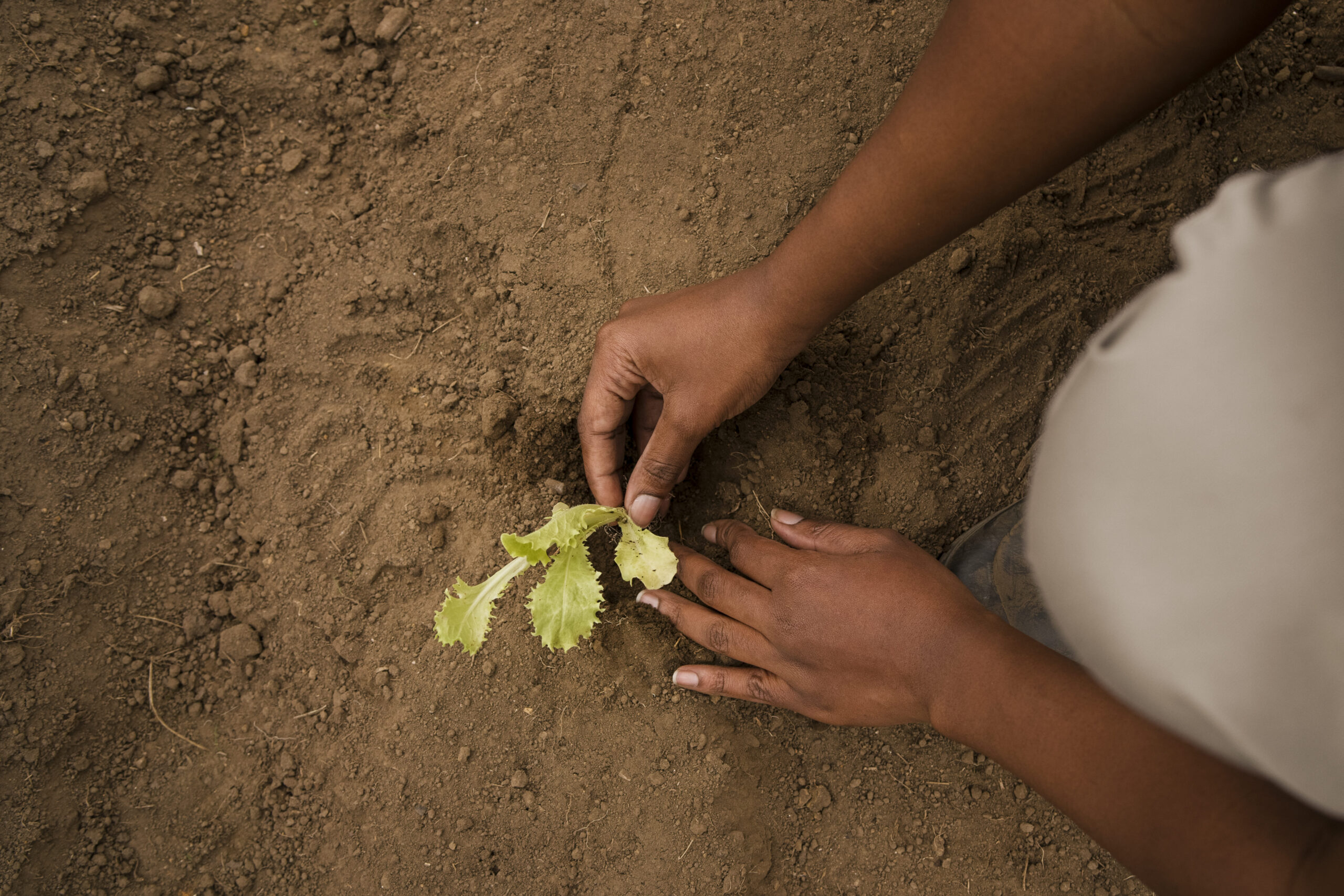
These projects show that hope can be concrete, embodied in everyday actions: cultivating the land differently, passing on know-how, creating a sustainable activity, taking care of one's territory.
Fondacio's vision: to awaken the best in everyone
Fondacio is a Christian movement present in more than 20 countries, committed for decades to serving youth, education and social transformation. Its vision is based on a simple and strong conviction: every person carries within them a potential for growth and contribution to the world.
Hope, in our view, is not abstract. It is:
- relational,
- embodied,
- community,
- action-oriented.
It is experienced through support, training, shared life, and duration.
A hope that is built over time
Unlike those focused on immediate results, Fondacio adopts a long-term approach. Profound transformations require time, patience, and a deep commitment to the individuals they support.
It is often in the invisible realm that the most lasting changes take place:
- restored confidence,
- a changing perspective
- a vocation that is emerging,
- a community that is growing stronger.
A call for active and shared hope
Today, more than ever, the world needs an active hope, one that does not just believe, but acts; one that does not retreat, but connects.
Everyone can contribute, in their own way:
- by committing,
- by supporting educational and social projects,
- by transmitting,
- by taking care of living things,
- by daring to believe that change is possible.
Choosing hope as an act of courage
Hope is not a fleeting emotion. It is a courageous choice, renewed every day, in the face of the challenges of our time.
Through education, youth, integral ecology and community engagement, initiatives like those led by Fondacio show that another future is possible — more humane, more just, more fraternal.